
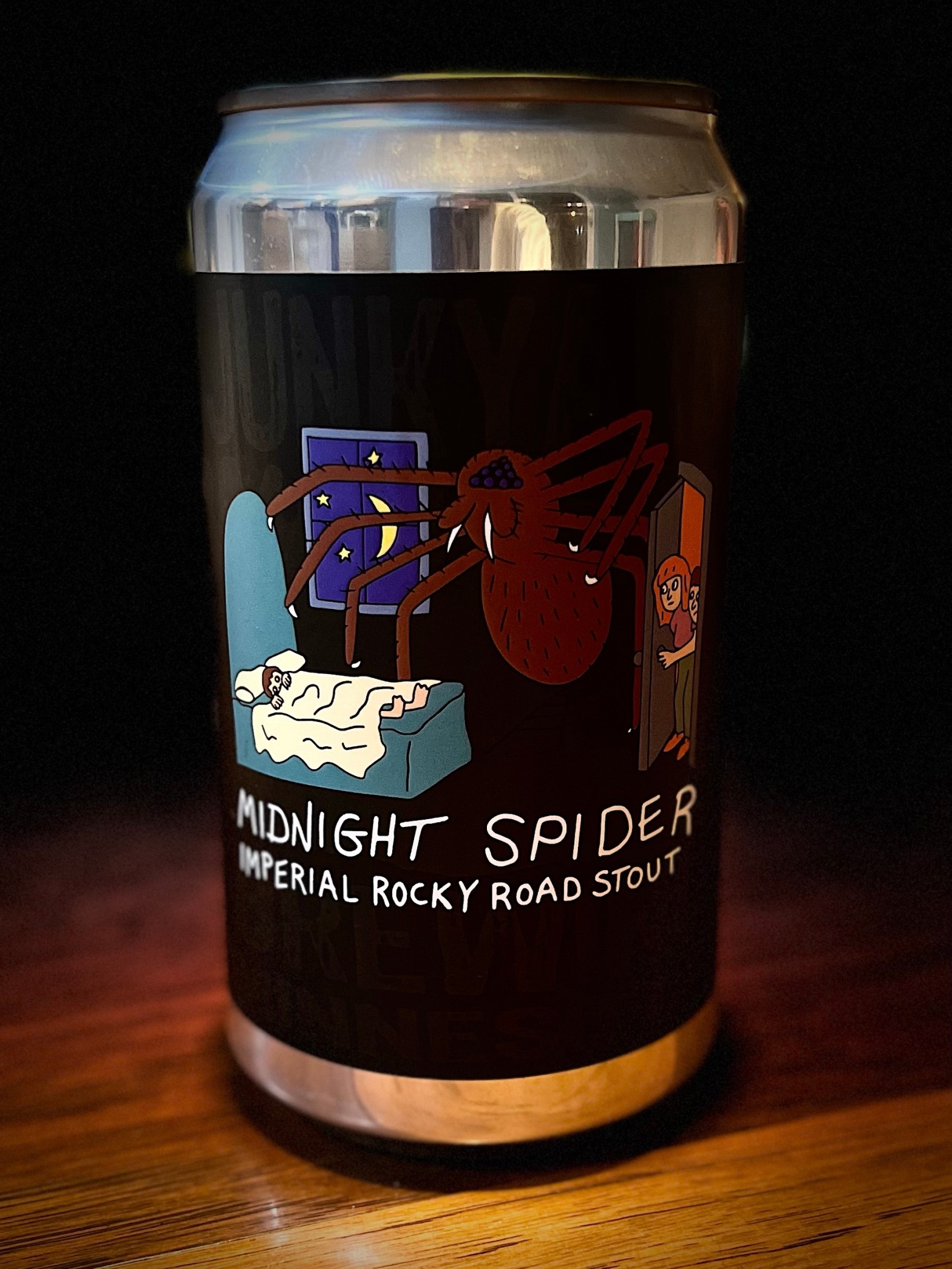
Mighty fine. Thick chocolate with a sweet and creamy whip and a hint of nuttiness. 4.25/5 stars.
Happy National Beer Can Appreciation Day! Today is the anniversary of the first time that beer was offered in cans, in 1935. You can read more about the holiday here if you’re interested.
Today seems an auspicious day for me to weigh in on the debate of cans vs. bottles. It’s been hashed out all over the internet and in bars and bottleshops the world over, but there is a clear winner. If a look at your supermarket’s beverage case doesn’t answer the question for you, let me lay down some logic.
Let’s start with the bottles side of the debate. Bottles are traditional. Bottles are easy to sanitize and reuse (that’s why I still use bottles for homebrewing), to the point that an effort was launched to sell reusable glass bottles that consumers can return for a deposit and they will be refilled later. Bottles are elegant, which is why most wine is still packaged that way. Consumers are willing to pay more for a product in a bottle than a can, at least so far. Case in point, wax-dipped bottles and cork-and-cage bottles, despite the annoyance of opening them, just scream “high-end product inside!” and are always used for products sold at a higher price point than their relatives. Bottles are better insulators than cans, meaning your beer will stay at the same temperature for a longer period of time.
Now for the counterpoints. Beer is prone to developing off flavors (undesirable flavors) when exposed to sunlight. Cans are completely opaque, while bottles are only translucent. Beers packaged in clear bottles should never be trusted, since the likelihood of getting a light-struck beer is very high (the flavor is known as “skunky”). Cans are also better conductors, meaning you can chill down that room temperature brew more quickly than in a bottle. When it comes to environmental factors, cans are superior. They weigh less (less fuel needed to transport), they are less prone to breakage (less waste), they have a more efficient shape (less wasted space), and aluminum is more likely to be recycled (in the US) creating massive future energy savings compared to glass. Along with transportation concerns for distribution, they are also easier for consumers to transport for the same reasons. If you’re going on a hike, which would you rather carry: a sixer of glass or aluminum?
Many holdouts will complain that beverages taste better out of a bottle than a can. To that, I first say, “Pour your beer into a glass!” I’ll cover the reasons why in a future post, but suffice to say you’re missing out on a lot if you drink straight from the container. B) because science says you’re wrong. And, 3) Stop smelling the can and thinking it’s the beer. Cans are lined, so there is no metal in the beer for you to taste.
Let’s try another poll!

 A Beer a Day
Thorough, concise analysis, thanks Carl.
LikeLiked by 1 person