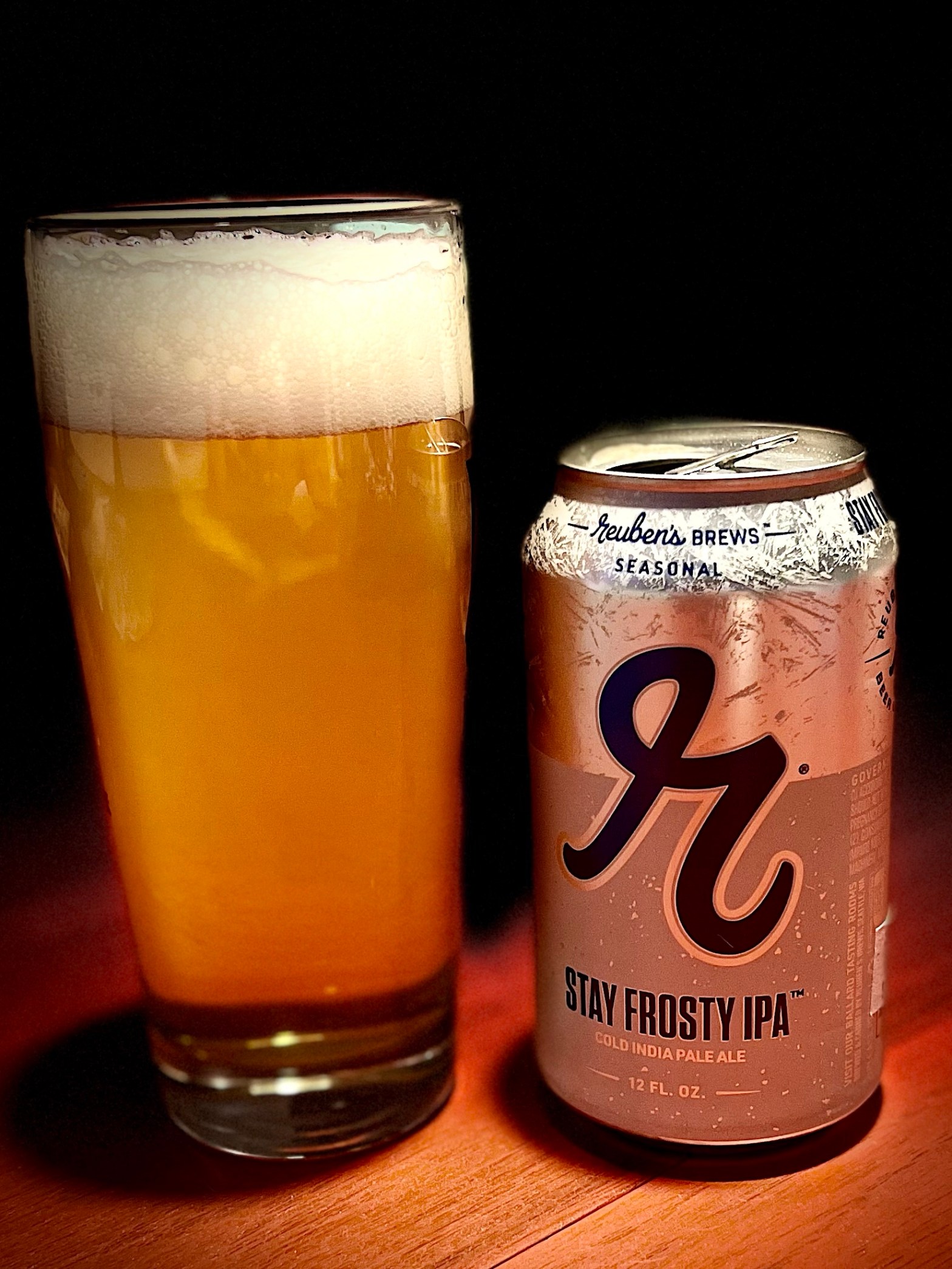
Tropical and sweet. Notes of grapefruit, vanilla, pineapple, and pine resin. Light and crisp, with sharp acidity and a drying finish. 3.75/5 stars.
“What is a cold IPA anyway?” The originator of the style, head brewer Kevin Davey of Wayfinder Beer of Portland, has been asked this question ad nauseam by all reports. It’s gotten to the point that they put a dedicated page on their website to explain the style and their approach. That hasn’t stopped other breweries from riding the wave of popularity that the style has enjoyed. especially here on the West Coast. The short answer, is that it’s a variant of the West Coast IPA fermented at colder temperatures than a typical ale (but not quite lager temps). If you want the full rundown from Kevin, check out this writeup. The end result is something hoppier than any lager, but crisper than most ales. It’s delicious.
It begs the question of whether a cold IPA is a distinct style. You can dive into threads like this one on Reddit if you want to make your opinion known. I would personally argue both yes and no. Yes, Cold IPA can be considered a distinct style because it is brewed in a different way that traditional IPAs. I think this is especially true when following Kevin’s method of cool-fermenting with ale yeast, as opposed to making an aggressively hoppy lager. (Hoppy Pilsners or IPLs (India Pale Lagers) are separately established, and Kevin goes into the drawbacks of that methodology in his post). I think that this is a distinct variation of the IPA in the same way that a Black IPA or a Red IPA are. After all, beer is always some combination of water, malt, hops, and yeast (possibly with other ingredients). It can’t be considered splitting hairs to differentiate a cold-fermented West Coast IPA from a standard warm-fermented version, in the same way that a stout is inarguably different from a black lager. Ingredients matter, and so does method. Has it been recognized by the BJCP as a separate style yet? No, but then again they didn’t recognize the hazy/NEIPA as a separate style for 15 years after it was reportedly first created. Wayfinder only released Cold IPA (originally Relapse IPA) in 2018, after all.
To play devil’s advocate for myself, I’ll also argue the “No” response. No, Cold IPA is not a distinct style. Making a small tweak to an American IPA does not make it something new. For that matter, all of this West Coast/East Coast/New England/etc. nonsense of labeling IPAs as distinct styles needs to stop. Just because you use one type of hops versus another, or add them earlier or later in the process, or use more or less of them, doesn’t mean you created a new style of beer. Do they taste different from each other? Sure. Is that difference as easily distinguished as between a Pilsner and a stout? Definitely not. It’s more akin to Coke versus Pepsi than Coke versus Fanta Orange. No one would ever confuse cola and orange soda, visually, olfactorily, or tastewise. The same is true of most beer styles without “Pale Ale” in their names. A Belgian Quad is very different from a Belgian Tripel, a Hefeweizen quite distinct from a Helles. Is an IPA made with Simcoe hops separate from an IPA with Galaxy? Not so much. Let’s stop the endless subdivision of IPAs and just get on with drinking.
If you’re enjoying the blog, please consider supporting my work on Patreon. Egészségedre!

 A Beer a Day