
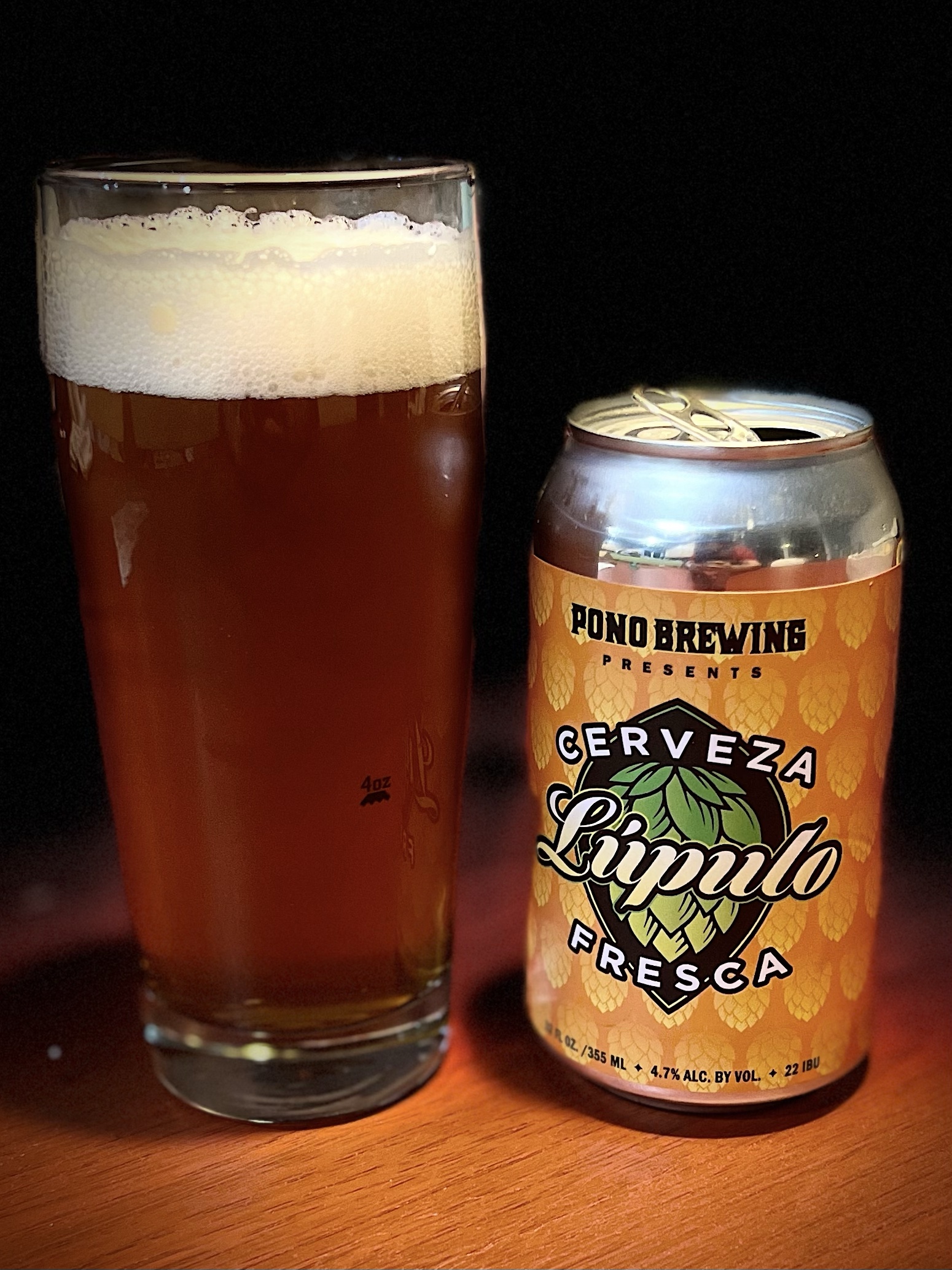
Fresh hop flavor is gone (six months after production, no surprise), leaving a very sweet caramelly amber with hints of melon and citrus. 3/5 stars.
Fresh hop beer. It comes but once a year, and then it’s gone until the next hop harvest. Unless you buy a can of beer from the “reduced price for quick sale” bin. Hopefully you gathered from context that February is not fresh hop season. In fact, I had no business drinking a fresh hopped beer now. As I’ve discussed in my post about aging beer, hops flavors and aromas quickly drop off the longer a beer hangs around. Considering the shelf life for hoppy beers is usually a couple of months, fresh hop beer should be consumed even more quickly than the standard types. So why did I do this? I was curious about what it would taste like, of course!
What does the term “fresh hop” even mean? Are other types of beer “stale hopped” or “old hopped?” Well, kind of. The vast majority of beers that you drink use dried hops. They are processed (or unprocessed) in a variety of manners to accentuate different aspects of the hops or for ease of packaging and transportation. They range from whole cone (all the vegetal matter) to extracts (no greens). After being pulled from the field, the hop cones are carefully dried and processed to protect as much of the volatile compounds as possible, while ensuring they can still be used for the remainder of the year. I’ll give you a better run-down in September when the humulus lupulus is ready to pull in. Let’s gloss over the key points for now.
Fresh hop beer uses, you guessed it, freshly picked hops. Here in the Pacific Northwest, the largest hop-producing region in the world, breweries compete to see just how fresh they can keep the hops. I’ve read blog posts and can labels claiming that brewers picked up the hops from the grower and drove straight through to their home brewery to drop the load into a waiting kettle. “Same day,” “within four hours,” and “straight from the field” appear everywhere during the month of September. So, why the rush? Because hops are organic, and all organic things decay. It’s a race against entropy (like all of life). The delicious plant matter is dumped into the boiling wort and throughout the process to capture as many of the various flavors as possible. The end result is unique. A lot of the appealing “fresh” flavors that hops can impart are present, along with something else. There’s a hint of leaf and stem along with the expected bitter and fruity. Depending on the hops used, how they’re used, and the style of beer (usually an IPA, because hops are the whole point!), there can be nuances of earthy, vinous, vegetal, grassy, and more in both the aroma and flavor of the beer. A well-done fresh hop beer can be blissfully light and taste like the last kiss of summer or dank and dripping like the depths of a PNW winter. The amount and number of flavors and aromas that can be extracted from the fresh and unprocessed flowers is nothing short of incredible. Keep that in mind in another six months when you get a chance to try it out yourself.
If you’re enjoying the blog, please consider supporting my work on Patreon. Egészségedre!

 A Beer a Day