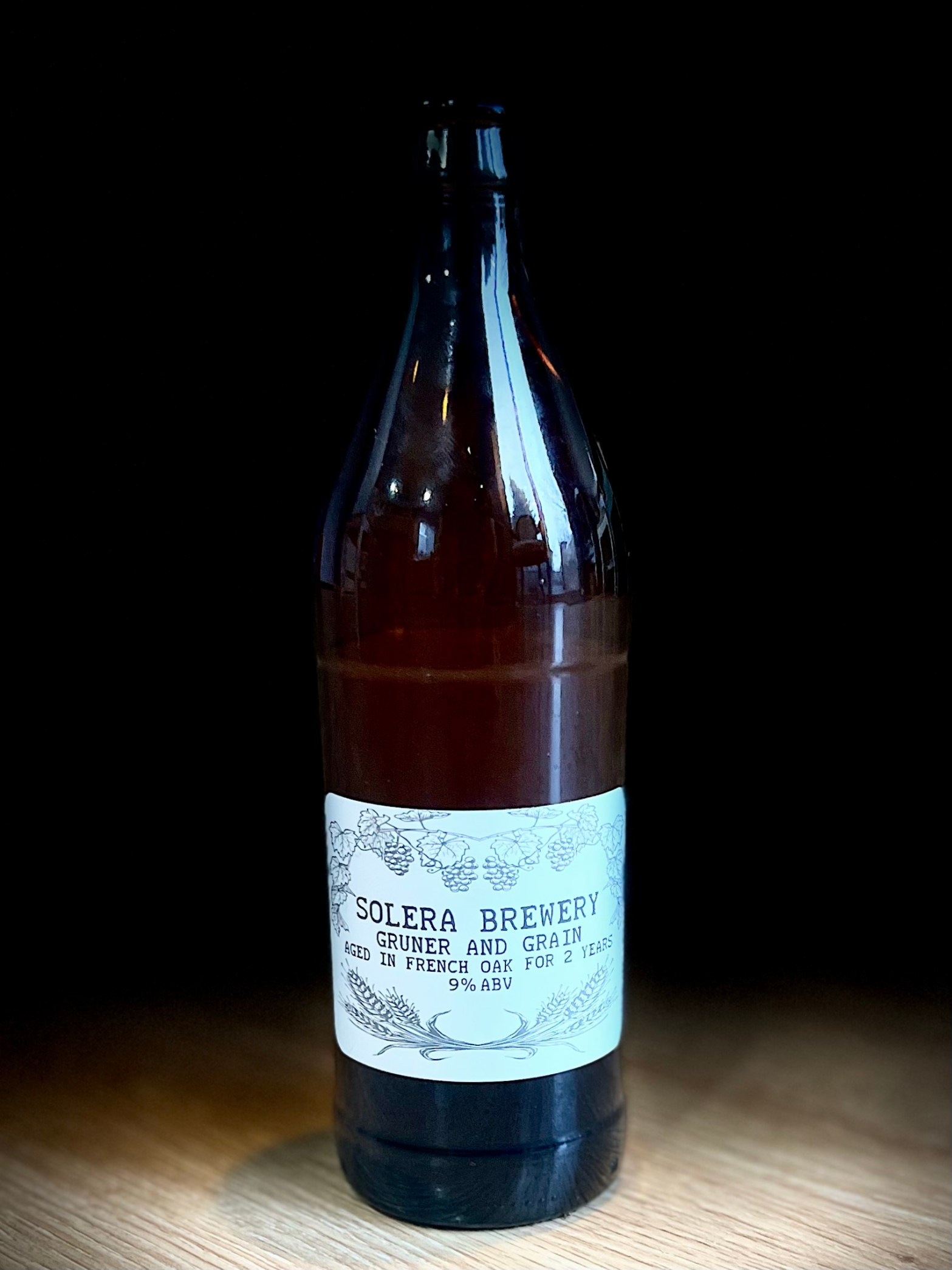
Fruity, tart, oaky, very full mouthfeel. 4/5 stars (May 2018).
Smooth and tart, rounded mouthfeel and a drying finish. Vapors of fall fruit tickle the nose. Tastes like a Chardonnay, but fuller-bodied and with more pucker. 4.75/5 stars (January 2022).
The reviews above are for the same beer, from the same batch. After we thoroughly enjoyed the beer at our very first visit to Solera, we each took a bottle of this home. I drank mine that same month, and my friend banished his to the beer cellar. Three and a half years later, aging took a good beer and transformed it into a spectacular beer. This is what aging a beer can do, if you’re lucky. Any sharp edges from the souring process had been smoothed off with time, the oak tannins mellowed, the fruit allowed to shine in its mature and comfortable new form. Mind you, this was a beer that was aged in French oak barrels for two years before we brought them home. That dates the base beer to roughly spring of 2016, almost six years before we consumed it. If someone handed you a Coke that was made six years ago, would you drink it? I briefly discussed the miracles/dangers of aging beer in a previous post, but let’s dive in to what is actually going on when a beer hangs around for a while.
First off, a disclaimer. Only cellar beer if you are OK throwing it away. It’s possible the beer will change in ways that create new, delicious flavors. It’s also possible that the beer will be a straight drain pour. That is despite any efforts you take to properly store your containers, so be warned! BeerAdvocate even went so far as to name this month “Cellaruary” to raise awareness about drinking beer immediately after purchase. On to the content.
If you want a comprehensive look at how to cellar, check out this great write-up from The Beer Connoisseur. If you’re looking for the TLDR version, here it is:
- Buy (at least) two of each beer. Drink one now, put the other away.
- Pick the right style of beer. High ABV and/or sour beer ages the best. Hop flavor/aroma diminishes with age, so probably no IPAs.
- Find somewhere dark. Light will react with the hops in the beer and skunk it.
- Keep the temperature moderate and consistent, 55-60 degrees F is ideal.
- If the beer is corked, keep the humidity moderate. Cork will dry (or mold) and ruin the beer.
- Don’t touch it. The flavor will not appreciably change for at least six months.
So now what? What’s happening inside the container? Oxygen is changing the various volatile compounds in the beer! Unless the beer was somehow packaged without any dissolved oxygen and has a perfect seal, there will be oxygen present in the container. What does that do to the beer? Most of the flavor and aroma from hops will disappear, removing most of the bitterness and bringing malt characteristics forward. Bright and aggressive sour flavors will mellow. Any defects in the beer will become more prominent (wet cardboard, metallic, and meaty flavors). As the bitterness and acidity mellow, sweet and bready flavors take the forefront. Any “farmhouse” type flavors will increase (earthy, straw, woody). Wine-like flavors will also increase (vinous, sherry). The beer will definitely taste different, and (if you have the luxury of multiple bottles) the characteristics will continue evolving over time. It will be a gamble if you opened it at the right time, or if more (or less) time would have provided a better experience. Will the beer be better than when it was fresh? Probably not. Will it be the experience that the brewer intended? Again, probably not. Might you get lucky? Depends on what your expectations are going into the experience!
If you’re enjoying the blog, please consider supporting my work on Patreon. Egészségedre!

 A Beer a Day
1 Comment