OK, OK. This isn’t a post about beer, so I guess it doesn’t count towards by goal of “a beer a day.” We’ll toss it in the category of “other fermentables” and move along. I’ll make it up to you, I promise!
Let me begin by saying that I don’t typically like commercial hard cider. It’s either sweet and one-dimensional (why wouldn’t I just drink soft cider?) or it’s dry and… half-dimensional? Not sure how to describe something with slightly less than one dimension. Regardless, the full gamut tastes and smells like some variation on “I forgot my jug of unpasteurized apple juice in the back of the closet.” I understand that some people like discerning the differences in apple varieties and find the permutations of sweet/dry and still/sparkling sufficient. Some people also like wine. Whatever floats your boat! The few ciders that I’ve enjoyed have typically blurred the lines of what makes a standard commercial cider. Adding hops (yum!) and aging in used liquor barrels top my list of how to make an interesting cider. So, why would I take on this project of picking the requisite 100 pounds (45 kilograms) of golf ball-sized apples to make a beverage I don’t typically enjoy?
My neighbor has a couple apple trees on his property. One is fairly small (just high enough to peek over his cedar privacy fence) and produces about a dozen baseball-sized apples each year. The other is very close to our shared fence and is about 16 feet (5 meters) tall. Two years ago, I didn’t know that apple tree existed. When we bought our house, there were two good-sized ornamental cherry trees along that same fence line on our side. They completely obscured the apple tree. They also shaded it enough that no apples dropped on our property. When I took the trees out to change the eroding slope they sat upon, the apple tree suddenly had significantly more space and sun. It must have exploded with new growth during the summer I spent building a retaining wall. By the fall of the following year, its branches were so laden with tiny apples that it reached over the fence and touched down on our side. Inveterate forager that I am (never one to pass up on a free meal!), I started researching crabapple recipes. Jelly, jam, and cider topped the list. So, what to do?
Jelly or jam sounded nice, but I wanted to clear as many apples off our side of the fence as I could. No way was I going to make entire cases of preserves! I also didn’t want to leave so many apples hanging over my newly-planted garden. Our toddler loves playing in there, so the combined dangers of foraging insects (of the stinging variety) and mushy fruit covering the ground were a big motivating factor to find some way to put the apples to use. Cider! The internet told me I could use a huge amount of apples in cider. Maybe as much as 100 pounds to make five gallons (19 liters) of juice! I gathered my sturdy plastic pails and went to work.
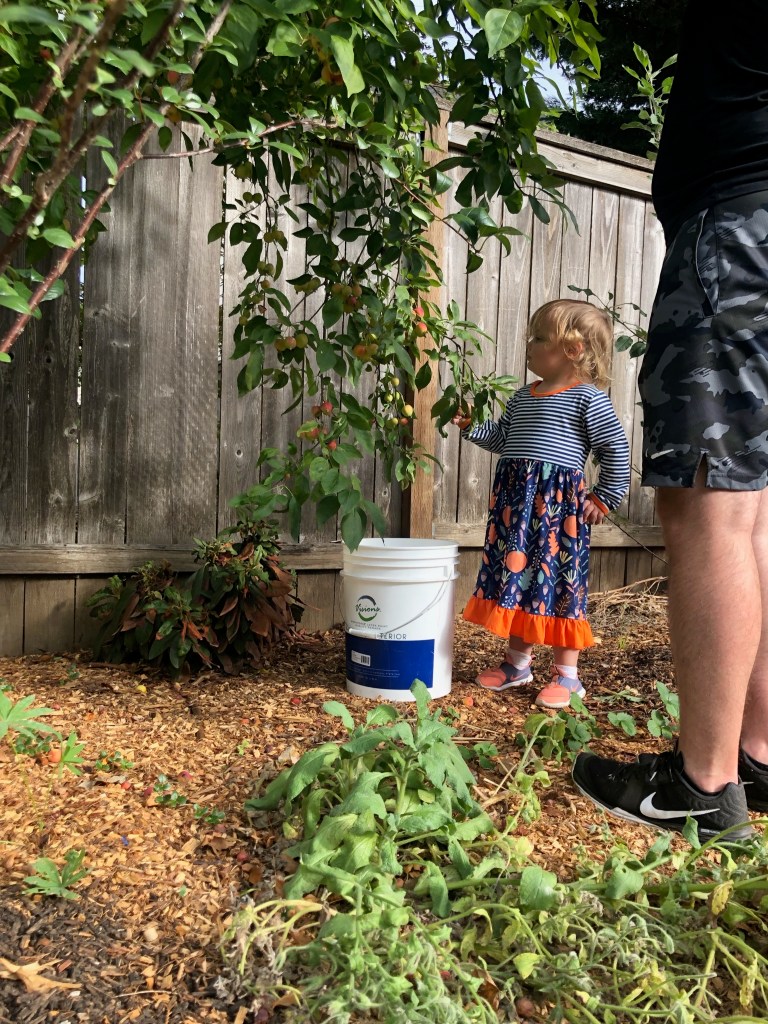
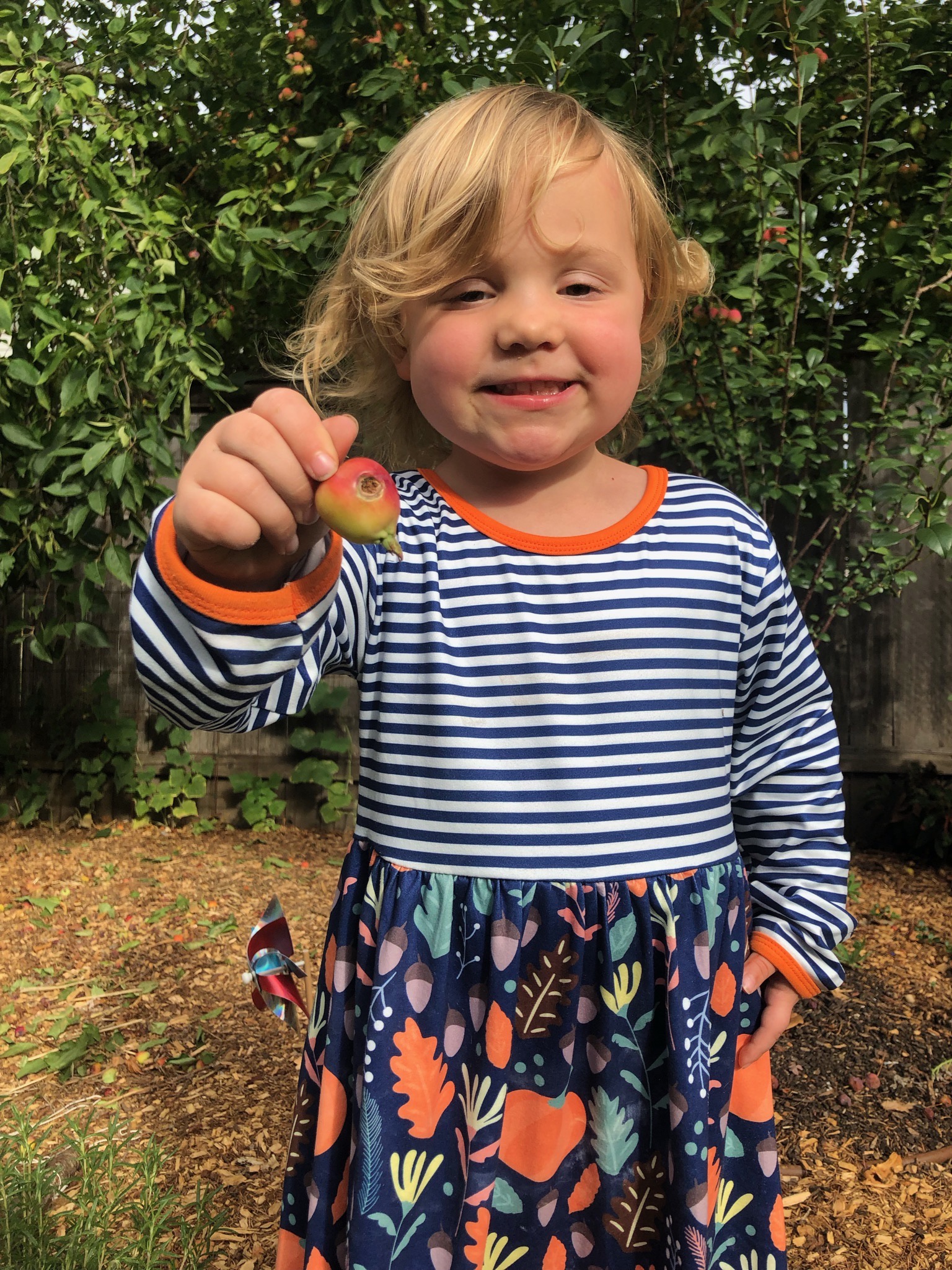
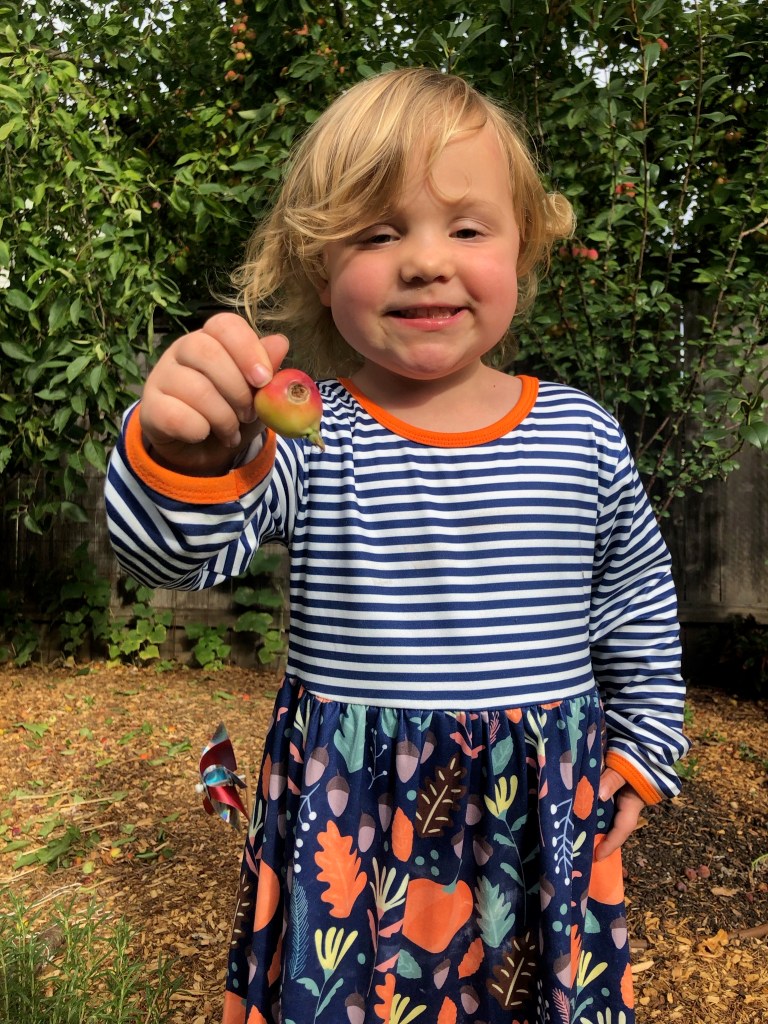
The over-encumbered branches made this an excellent activity to share with my three-year-old daughter. I hardly needed a stepladder to retrieve everything we needed! She would pick tiny apples, one by one, and drop them into a bucket after thoroughly inspecting them. When she got hungry, she would eat the next one she found. Yes, that was the true key to knowing the apples were good for cider. They were palatable to a child! Although they were significantly more tannic than an orchard apple, there was enough sweetness balancing the sharp acidity to appeal to her unrefined (and often fickle) taste buds. Despite the fact that I filled nearly 30 gallons (114 liters) of volume with one-inch (2.5 centimeter) diameter apples, I think I only spent eight hours picking. It was time well spent, basking in the afternoon sun during those autumn days. Plus, it kept our threenager occupied. Bonus! And I didn’t have to stop to assemble snacks for her. Double bonus! For those who know, you know how amazing that is.
Now for the next step, transmuting buckets of apples into (orange-y) golden nectar.

 A Beer a Day
4 Comments