
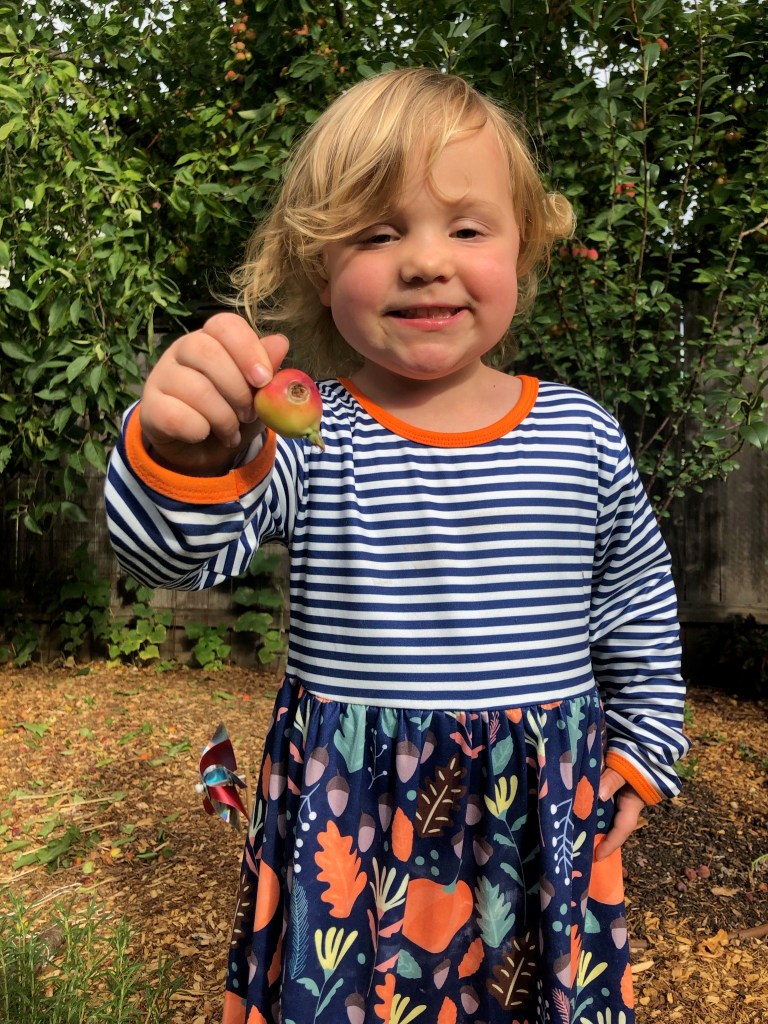
Time for the weekly slightly off-topic post! Here’s a quick recap of Part 1: For a few different reasons, I decided to make cider out of foraged crabapples from my neighbor’s tree. Sticking just to low-hanging branches on my side of the property line, my daughter and I harvested about 100 pounds of tiny apples. We had fun, she ate some of the harvest, but some transmutation was still necessary to get from apple to cider. Want more details? Check out this post!
Step one complete, on to step two! But how to proceed? I wanted to find a balance between cost and efficiency, so I thoroughly researched the options. There were really only two. Use a mechanical press, or extract by soaking. The advantage of extraction was no additional cost, but the disadvantage was time. A lot of time. Each apple would need to be quartered (or at least halved), according to the directions. There were hundreds of apples in each bucket, and I had four buckets full to the brim. As a test, I quartered and seeded enough apples for a small batch of jelly (about a large mixing-bowl full). It took three hours, and my hands were sticky and my back hurt. Nope! Not gonna happen!
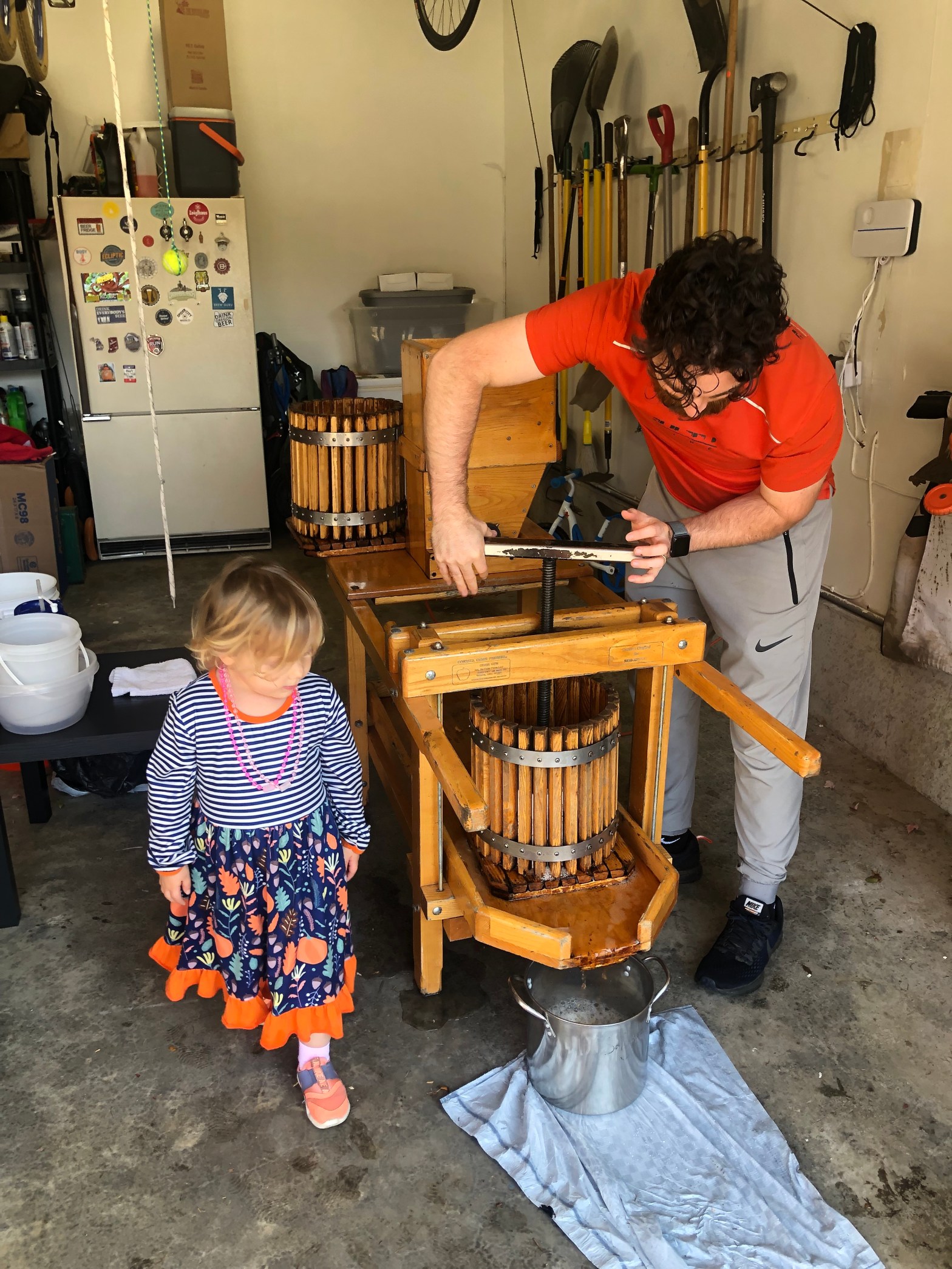
The second option was to use a cider press and grinder. Not something that most people have lying around, so that meant spending money. It was also surprisingly difficult to figure out where to rent one! I eventually discovered a nearby equipment rental shop that stocked one, but without a truck I wasn’t sure how to get it home! I called up the company and reserved the press for the following weekend. Fortunately, they thought it would fit in our Honda CR-V, so that was covered too. The press broke down into several pieces, and with some creative Tetris-ing we loaded it in. It was surprisingly easy to operate. I loaded gently rinsed apples into the hopper of the grinder, which chewed them into a fine mince. The ground apples went into a filter bag set inside an open-bottomed wooden basket (loose-fit wooden staves that would allow juice to flow through the sides). Then a thick wooden lid went over the top and the entire contraption went under a heavy-duty screw. The screw slowly cranked down the lid, squeezing all the liquid out of the apples and sending the juice down a trough into a waiting bucket. Then empty the pomace, reset, and repeat!
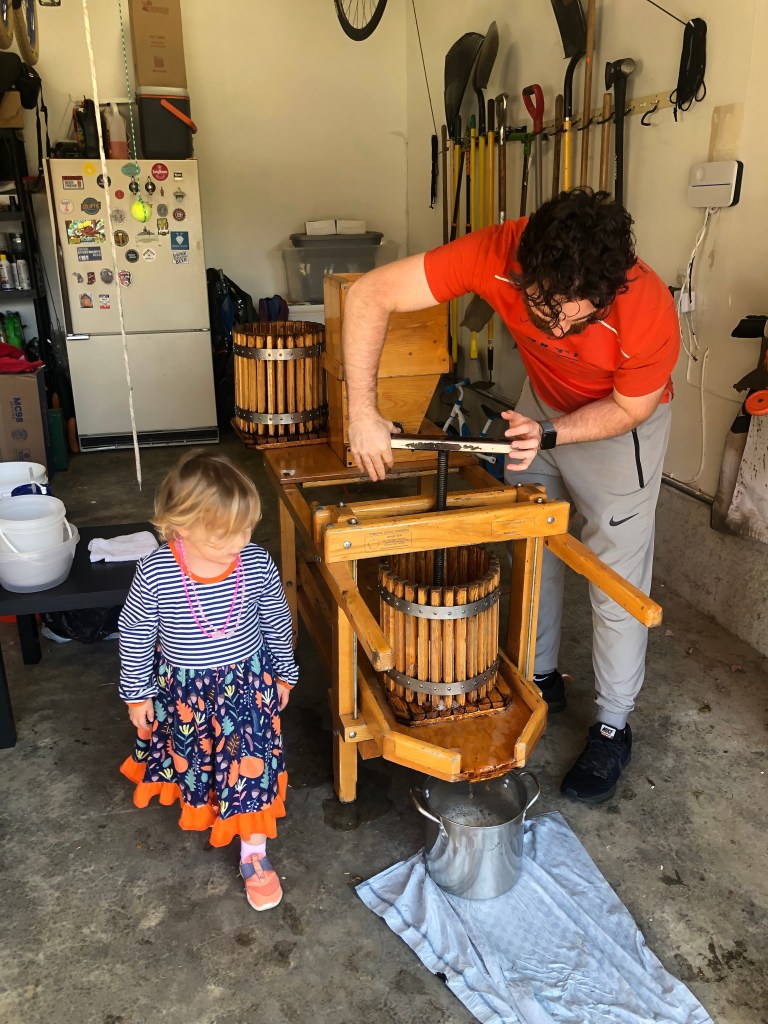
After a couple hours of juicing, all the apples were gone. Finally! A quick taste of the fruit of our labors confirmed that this would indeed be sweet, tart, and tannic enough to pass as a dry red wine. A quick hose down of the equipment, and it went back to the shop before close on the same day. The juice measured out as just shy of 5 gallons, and went into an 8-gallon fermentation bucket. Now it was time to make some magic! Check out next week’s installment to learn about the alchemy that is fermentation.

 A Beer a Day
1 Comment